


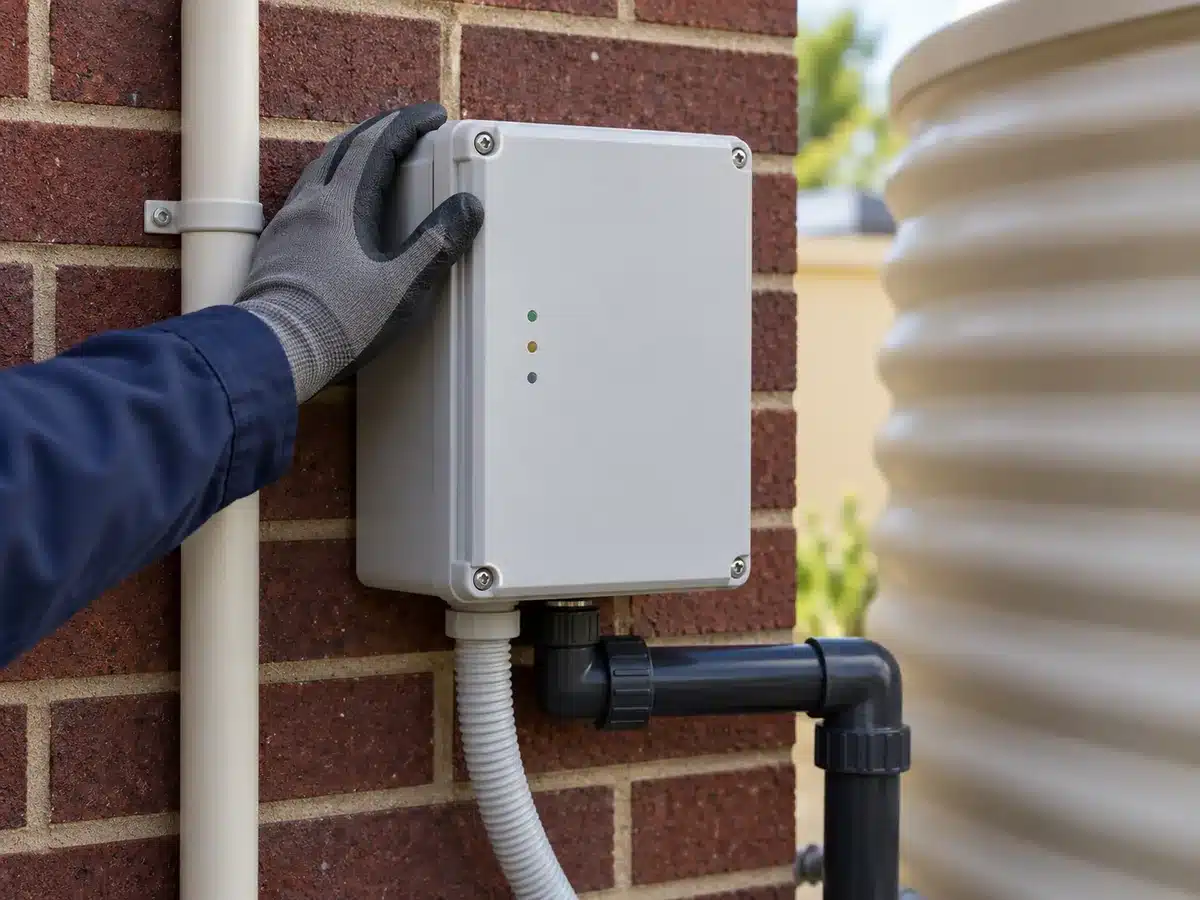
If your rainwater tank contains water but your home seems to keep using mains water, the tank level is only part of the picture. The pump, its controls and any mains changeover device need to work together. A functioning backup supply can keep connected fixtures working while a rainwater-system fault goes unnoticed.
Start by identifying the equipment and the outlets connected to it. Avoid changing valves or disconnecting the mains supply to test a system you do not know. For a plumbing assessment, visit our Sydney rainwater tank repairs and servicing page.
When mains-water use is normal
An automatic changeover system can use mains water when rainwater is unavailable. For example, White International’s Rainsaver MK6 documentation describes mains backup when the water level is too low or the pump or its power supply fails. Its return to rainwater depends on water availability and the pump resuming operation.
That example does not identify how every tank works. Check your own model’s manual or ask the installer to explain the arrangement. The details matter before anyone recommends a reset, adjustment or replacement.
Reasons a full tank may not supply the house
- The pump is not delivering water. A silent pump or an error display deserves investigation even when mains backup keeps the toilets working.
- The system is not recognising available rainwater. Equipment using a level sensor can have a sensing or connection issue.
- The water cannot move as intended. Depending on the pump and controller, priming, trapped air, debris or a mechanical problem can affect delivery or changeover.
Davey’s RainBank manual contains model-specific troubleshooting examples. Confirm the fault before replacing equipment.
If the pump itself is silent, humming or running without useful flow, our guide to a rainwater tank pump that is not working explains the observations to record.
What you can record before a visit
- The equipment details. Photograph accessible pump and controller labels. A wide photo helps show how the components are arranged.
- The water-level evidence. Record an external gauge reading if available. Make clear if “full” is an estimate rather than a confirmed reading.
- The affected fixtures. List the toilets, laundry or garden outlets believed to use the tank. Note which still work and whether the pump responds during their normal use.
- The timing. Include when the change started and whether it followed a blackout, an empty tank or maintenance work.
A water bill alone cannot identify the failed component. Keep your concern specific: for example, “the tank gauge has stayed high, the toilet still fills, and I no longer hear the pump”. That is a useful description for the person assessing the system.
Should you reset the controller?
Use the instructions for the exact model. Sydney Water notes that some pumps or switching devices can need attention after a blackout or electrical storm. A generic reset sequence is unsuitable when the equipment and the cause are unknown.
Stop using damaged equipment and keep clear of wet electrical connections. Do not bypass the controller, alter wiring or repeatedly reset a tripping safety switch. Arrange a licensed electrician for electrical faults; NSW SES advises that water-affected electrical equipment should be inspected before it is used again.
What to ask the plumber to explain
Ask which outlets the rainwater system supplies, what caused the loss of rainwater delivery and how the proposed repair addresses it. Where the system has automatic backup, ask for an explanation of both normal rainwater operation and changeover behaviour after the work.
Keep a record of the equipment model, work completed and any maintenance instructions. Follow-up observations are more useful when you know what the system should normally do.
Does fixing the pump make rainwater safe to drink?
No. Pump operation and drinking-water quality are separate matters. NSW Health recommends public water for drinking and cooking in urban areas. A pump repair does not establish that tank water is safe to drink.
Need help with a rainwater or mains-changeover problem? Call Xceed Plumbing on (02) 9072 0499 or request a booking. Tell us the equipment model, what still works and when the problem began.
Xceed Plumbing Customer Reviews
These Google reviews describe customers’ experiences with Xceed Plumbing across our services.
 Rating